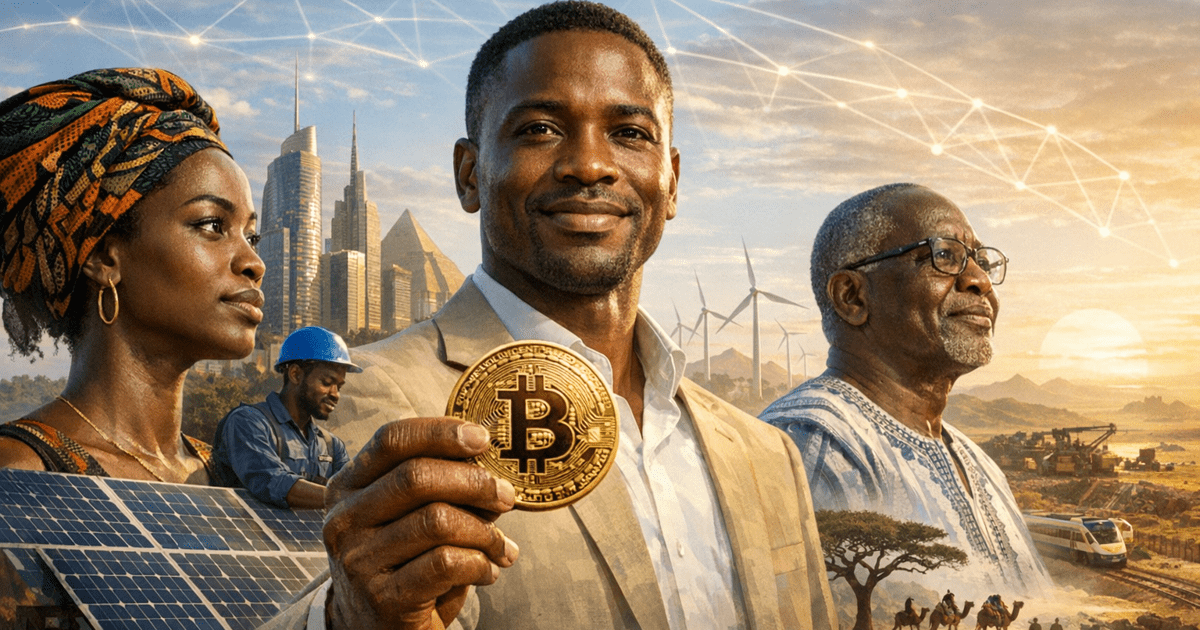
Bitcoin Is Financial Sovereignty For The African Century
The twenty-first century will not be defined by the old map alone.
Africa’s population weight is rising. Its entrepreneurial energy is rising. Its strategic importance in trade, energy, labor, and digital adoption is rising. In the decades ahead, the continent will matter more, not less, to the shape of the global economy. That should already be obvious.
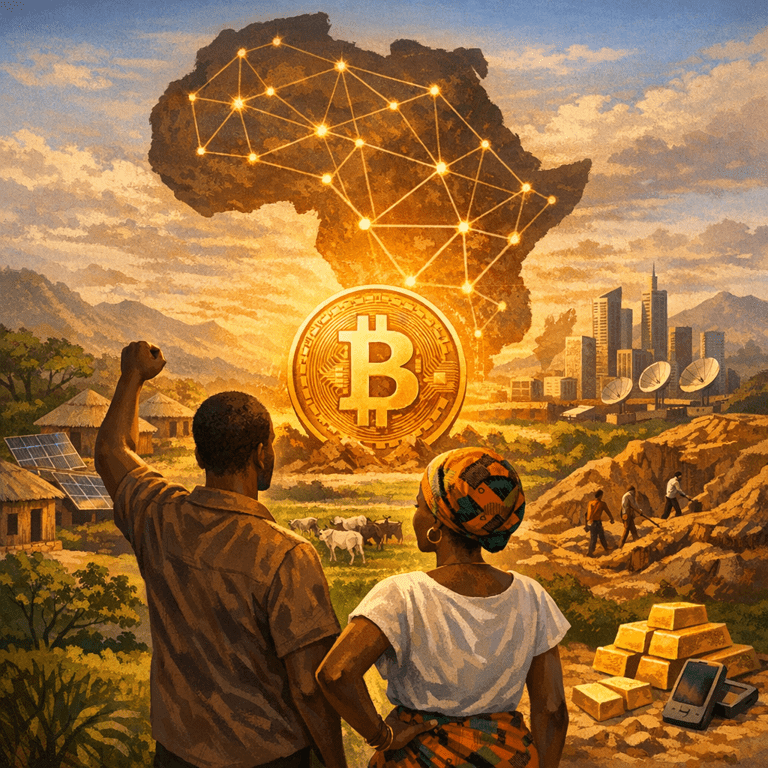
But there is a difference between demographic importance and financial sovereignty.
A region can grow in relevance while still operating inside inherited systems of monetary dependence. It can produce talent, labor, resources, and enterprise while remaining exposed to weak domestic currencies, externally shaped financial infrastructure, inflation, capital frictions, and the political legacy of monetary systems it did not design. That is one of the deepest challenges facing Africa in the modern era.
Bitcoin matters here because it changes the menu of options.
It offers more than a speculative asset. It offers a route toward monetary self-determination, durable savings, borderless ownership, and a form of financial participation that does not require waiting for the existing system to become fairer or more competent. In that sense, Bitcoin is not just relevant to Africa’s future. It may become one of the most important monetary tools of the African century.
Development Without Sovereignty Is Not Enough
Much of the global conversation about Africa is still trapped in the language of aid, development targets, and institutional reform. Some of that matters. But it often treats the continent as a recipient rather than an actor. It focuses on what external systems can do for Africa rather than on what Africans can build, own, and defend for themselves.
That framing is too small.
The real question is not simply how to improve outcomes inside inherited structures. It is how individuals, families, businesses, and nations can gain more direct control over their economic lives. That means stronger property rights. Stronger savings tools. Lower dependence on politically fragile intermediaries. Lower exposure to arbitrary dilution. More freedom to transact and preserve value across borders.
That is a sovereignty question.
And money sits at the center of it.
Inherited Monetary Dependence Is A Structural Problem
Many African economies face a recurring set of monetary constraints. Local currencies can be unstable. Inflation can punish savers. Access to global financial rails can be costly or politically mediated. Cross-border settlement can be slow and expensive. Foreign reserve dynamics and external debt structures can amplify dependence on monetary centers outside the continent.
This is not the same problem in every country, and the continent is far too large and varied for shallow generalizations. But the larger pattern is real: millions of people live in environments where preserving savings, moving value, and planning across time is harder than it should be.
That difficulty is not just inconvenient. It shapes behavior. When money is weak, time preference rises. Long-term planning gets harder. Capital formation weakens. People are pushed into defensive behavior rather than productive growth. The energy that should go into building gets redirected toward simply surviving monetary instability.
No civilization can reach its full productive potential while its citizens are forced to save in melting instruments.
Bitcoin Offers Ownership Without Asking Permission
This is where Bitcoin becomes more than a macro debate.
Bitcoin gives people the ability to hold a scarce digital asset directly, outside the balance sheet of a local bank, outside the discretionary control of a monetary authority, and outside the need for approval from a foreign payments network. That is a profound shift.
For the first time, a farmer, entrepreneur, freelancer, student, or business owner can save in a global hard asset that is accessible through an open network rather than through political privilege. That does not solve every local problem. But it changes the baseline. It gives individuals a monetary exit from some of the fragilities they inherited.
That matters because ownership is not abstract. It is the foundation of self-determination.
When people can store value in something harder to debase, their relationship to the future changes. They can think longer. They can protect more of the fruits of their work. They can depend less on institutions that have repeatedly failed them.
Bitcoin Lowers Dependence On Foreign Monetary Gatekeepers
Financial dependence often hides in plain sight. It shows up in remittance costs, correspondent banking constraints, capital controls, currency fragility, and the need to route economic life through systems built far away from the people using them.
Bitcoin does not erase geography, but it does reduce the importance of some legacy gatekeepers. A cross-border payment can settle without requiring the full stack of traditional intermediaries. A worker can receive value from abroad without waiting on a system designed around someone else’s interests. A business can hold part of its treasury in a neutral asset rather than entirely in local currency risk or foreign monetary dependency.
This is especially important in a continent where cross-border commerce and diaspora capital can be transformative, but where legacy financial plumbing is often expensive, slow, or exclusionary.
Bitcoin cannot replace every institution overnight. But it gives people leverage. It creates optionality. And optionality is one of the first building blocks of sovereignty.
The African Century Needs Better Savings Technology
People often talk about infrastructure in physical terms, and rightly so. Roads matter. Ports matter. Energy matters. Communications matter.
But monetary infrastructure matters too.
If the twenty-first century really will be an African century in demographic and entrepreneurial terms, then the region also needs tools that help people carry value through time. It needs savings technology that is portable, durable, globally legible, and resistant to local political breakdown or inflationary drift.
Bitcoin offers exactly that kind of infrastructure.
It is not perfect. It is volatile in the short term. It takes education. It requires operational care. But unlike almost every alternative, it is open to anyone and controlled by no central issuer. It is a monetary network built for people who cannot assume that legacy institutions will protect them.
That is not a niche use case. In much of the world, it is a deeply rational one.
This Is Not Charity. It Is Self-Determination.
One of the worst habits in global finance is talking about Africa only through the lens of rescue. Bitcoin invites a different frame.
This is not about outsiders delivering a miracle to passive recipients. It is about open monetary infrastructure that people can adopt, build on, and defend themselves. It is about agency, not paternalism.
Bitcoin aligns with that agency because it does not ask anyone to wait for institutional permission before participating. It does not require a benevolent central planner. It does not require the global financial order to suddenly become fair. It allows people to opt into a monetary standard that is the same for everyone.
That equality of rules matters. It is one of the reasons Bitcoin feels more like self-determination than dependency.
Why The Civilizational Frame Matters
If you only look at Bitcoin as a trade, you miss why it could matter so deeply in places where monetary fragility is not theoretical. The bigger story is civilizational.
The African century will not simply be about headline GDP. It will be about whether rising populations and rising talent can translate into durable ownership, capital retention, and independent economic power. It will be about whether growth compounds locally or leaks away through weak savings systems, external dependence, and fragile monetary foundations.
Bitcoin does not solve governance. It does not automatically solve energy, law, or infrastructure. But it does address one foundational question: can people save and transact in a neutral monetary network that is not designed to subordinate them?
That is a bigger question than many financial commentators are willing to admit.
Bitcoin Lets People Opt Out Of Monetary Inheritance
The systems people are born into shape their options long before they understand them. Weak money trains short time horizons. Inflation trains defensive behavior. Financial exclusion trains dependence. External monetary dominance trains deference to systems built elsewhere.
Bitcoin creates an opening out of that inheritance.
It gives individuals and communities a way to opt into a different monetary logic: fixed supply instead of discretionary expansion, open access instead of gatekept participation, self-custody instead of permanent dependency, global settlement instead of inherited financial bottlenecks.
That shift may happen unevenly. It may happen country by country, city by city, household by household. But the direction matters. Once people see that monetary dependence is not inevitable, the psychological break is already underway.
And psychological breaks matter before civilizational ones do.
Bitcoin Is A Tool For A More Independent Future
The African century deserves better than growth without sovereignty.
It deserves money that does not quietly erode the dignity of work. It deserves savings tools that help people build across generations. It deserves networks that lower dependence on distant monetary centers and politically fragile intermediaries. It deserves ownership that is real, portable, and defensible.
Bitcoin cannot build that future by itself. But it can equip people for it.
That is why the case for Bitcoin in Africa is larger than remittances, larger than inflation hedging, and larger than speculation. It is a case about self-determination.
In a century where Africa’s importance will keep rising, financial sovereignty will matter just as much as growth.
Bitcoin is one of the first monetary systems in modern history that allows that sovereignty to be claimed from the bottom up.
Discussion
Join the Conversation